





Our Insights
Our insights draw on bpma’s research and delivery experience across rail, transport and major infrastructure. We focus on the forward-looking issues that matter most to the people who plan, procure and deliver major programs, and we write each paper to offer genuine insight: grounded in practice, candid about what works, and practical enough to apply.
Featured Insights
Every major project builds two things: the physical asset and the temporary organisation that delivers it. The contract governing both imposes legal, corporate and reporting obligations that are rarely planned, resourced or managed. This paper examines why, what it costs, and what clients, contractors and the industry can do about it.
Why siloed delivery fails when megaprojects run in parallel, and a practical framework for aligning agencies and managing interface risk.
How AI and machine learning are moving project controls beyond monthly reporting towards dynamic schedule optimisation and predictive cost control.
AI can significantly shorten the review of complex contracts, but confidentiality and data security risks are real. What to check before you upload.
Featured video
The Digital Transformation Revolutionising
Asset Management
Infrastructure and utility organisations are encountering increasingly complex challenges, from maintaining ageing assets to adopting cutting-edge technologies that optimise performance. Emerging trends such as advanced sensors, AI-driven analytics, automation, and digital enablement are reshaping how organisations manage critical infrastructure. These innovations are addressing the growing need for cost-effective solutions, improved reliability, and regulatory compliance.
The organisations getting ahead are bringing it together: sensor data, weather forecasts and maintenance history in one place, so resources go where they’ll do the most good.
This short video looks at what is driving the shift and the results asset owners are already seeing. To read the full white paper, Click here. For more videos, follow us on Instagram
1:22Featured Diagrams
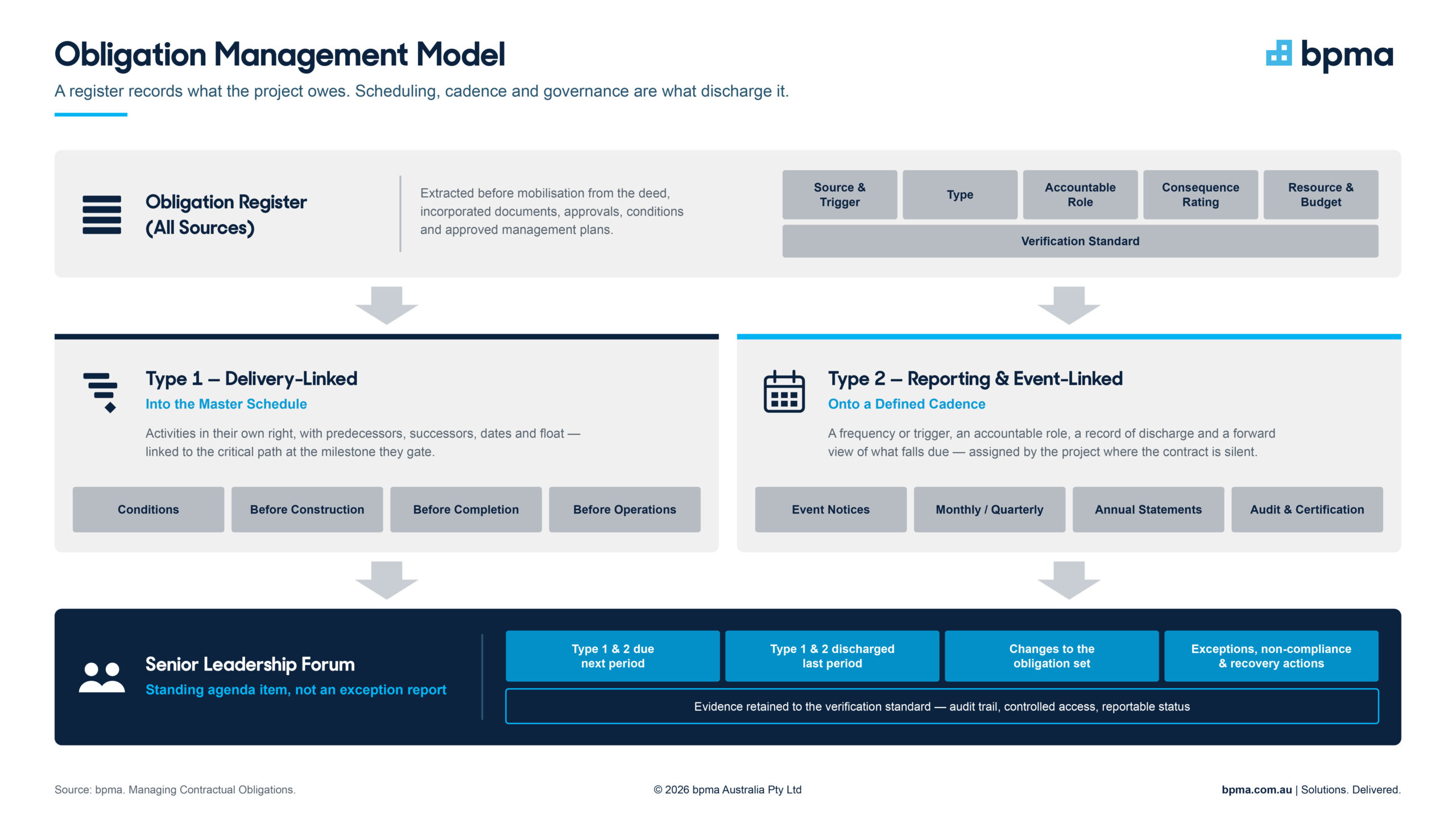
Obligation Management Model
A register records what a project owes; scheduling, cadence and governance are what discharge it. Each obligation is extracted before mobilisation and given a trigger, an accountable role, a consequence rating, a budget and a verification standard.
Delivery-linked obligations go into the master schedule. Reporting and event-linked obligations run on a defined cadence, and both are reviewed by senior leadership as a standing agenda item.
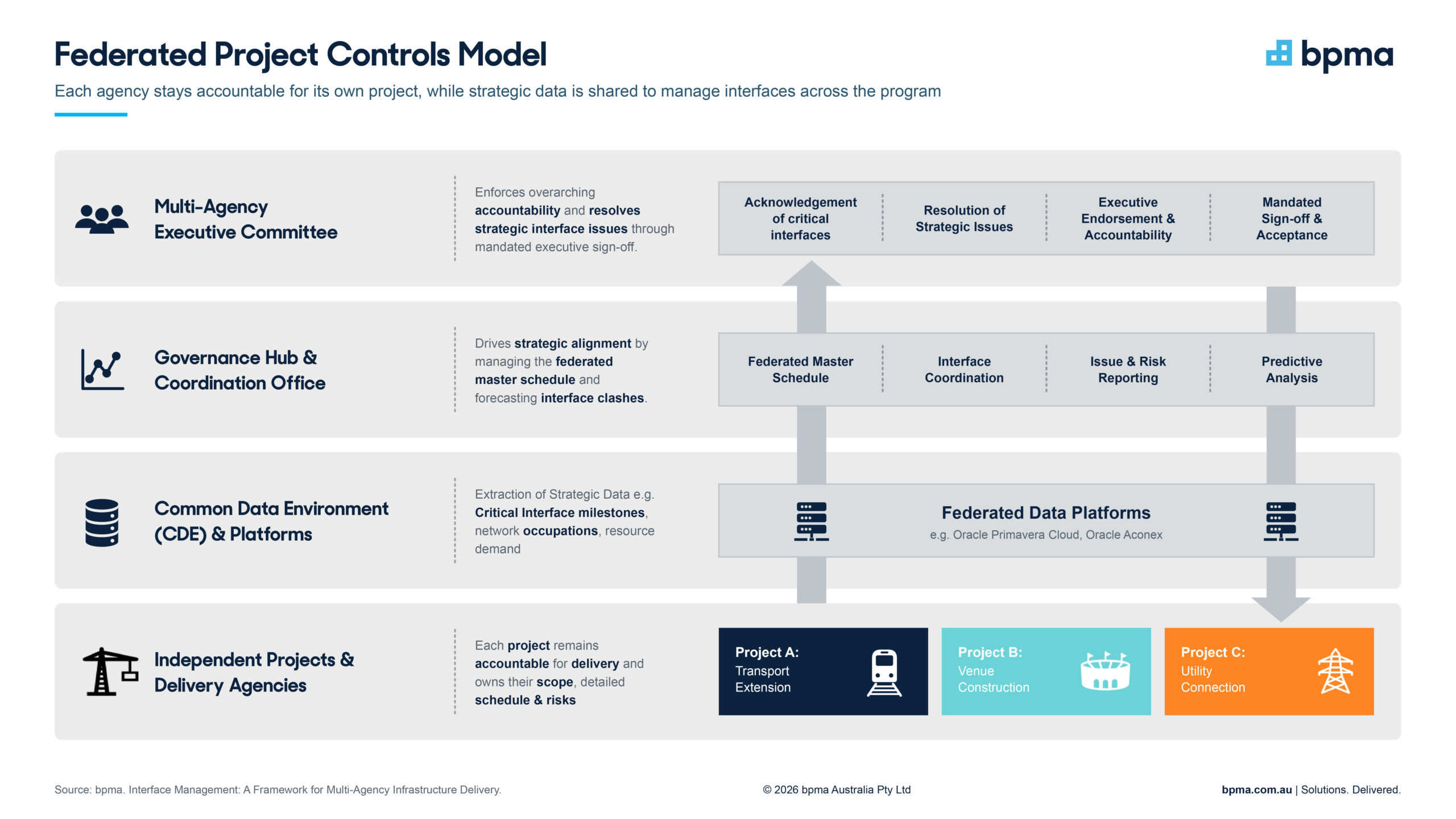
Federated Project Controls Model
When independent agencies deliver concurrent megaprojects, no single schedule shows where their work collides. Each project remains accountable for its own scope, schedule and risks, while strategic data such as interface milestones and network occupations is shared through federated platforms like Oracle Primavera Cloud and Aconex.
A governance hub uses that data to run a federated master schedule and forecast clashes, and a multi-agency executive committee resolves strategic issues through mandated sign-off.
Reducing Embodied Carbon in Cities
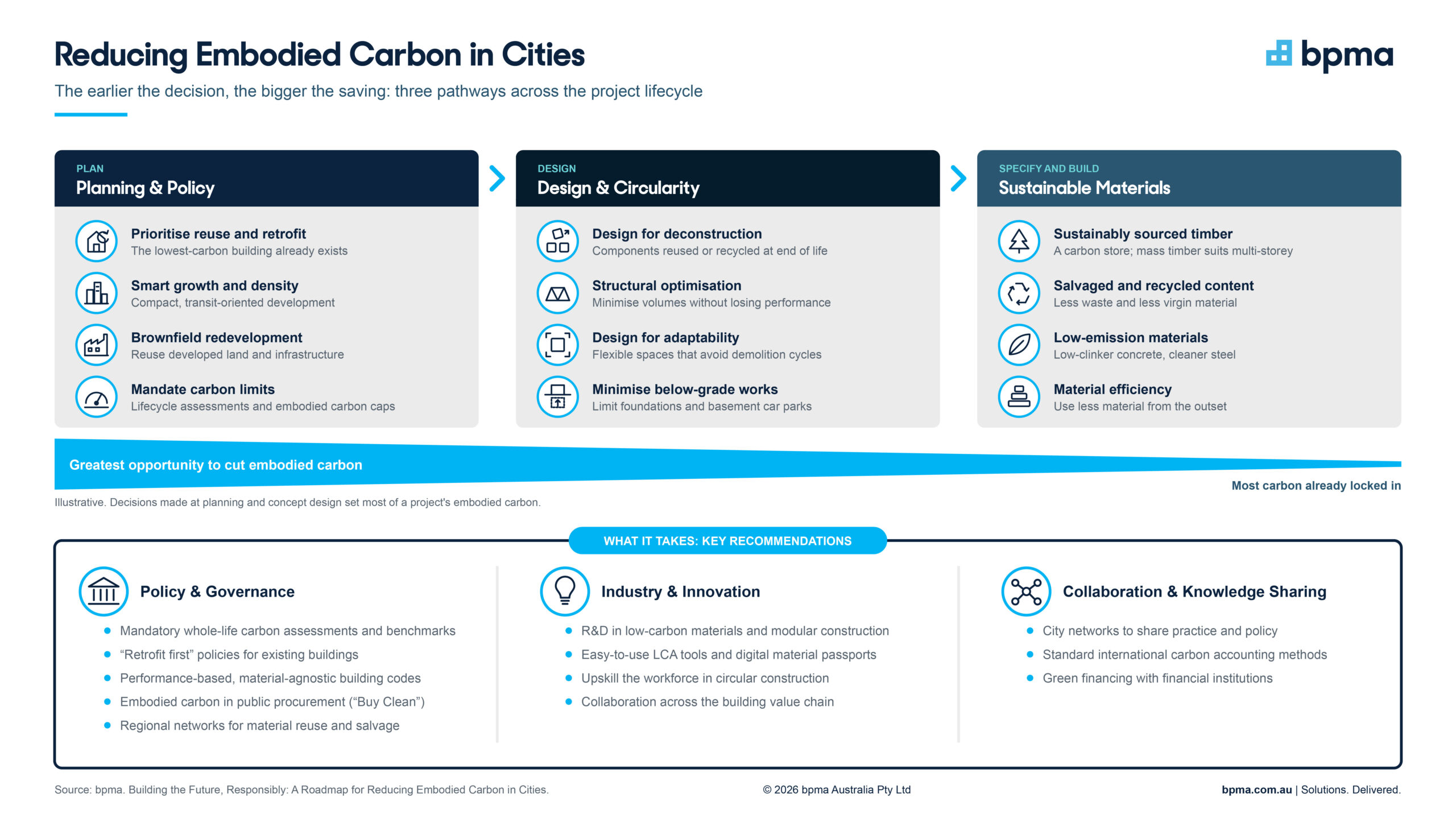
Most of a building’s embodied carbon is locked in before construction starts. The earliest decisions offer the biggest savings: planning and policy that favour reuse, retrofit and density, design that builds in deconstruction and adaptability, and materials specified for low emissions and recycled content.
Making those choices standard practice needs supporting action: whole-life carbon assessment, retrofit-first policy and low-carbon procurement from government, new materials and tools from industry, and shared methods and green finance across cities.
Quantum vs Classical Computing
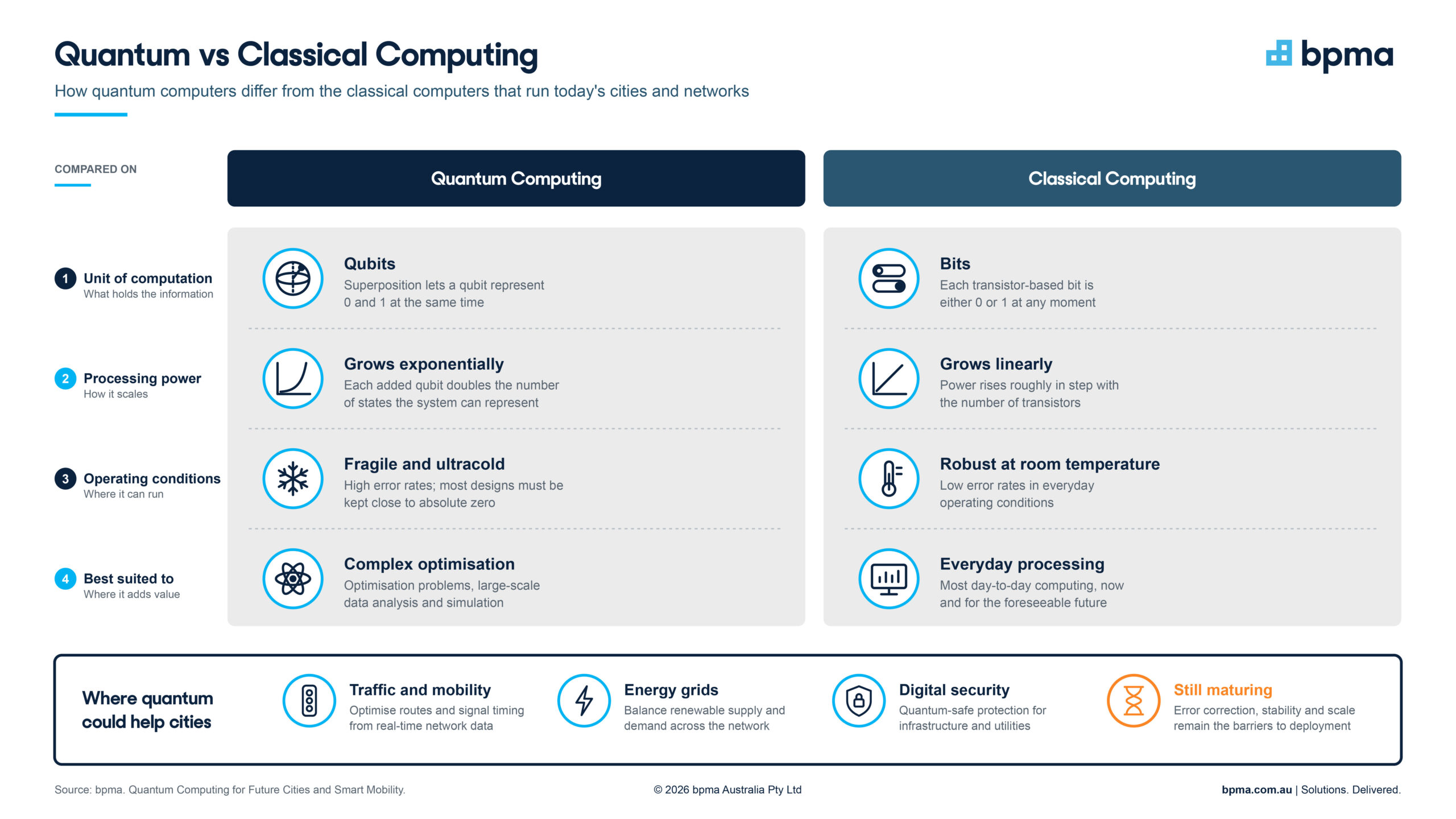
Quantum computing holds the potential to deliver powerful solutions for future cities and smart mobility. Leveraging quantum mechanics, this technology could optimise traffic flow, enhance the use of renewable energy, and ensure the digital security of our infrastructure and utilities.
The diagram shows the differences that allow quantum computers to generate so much more computing power.
The Integrated Mobility Hub
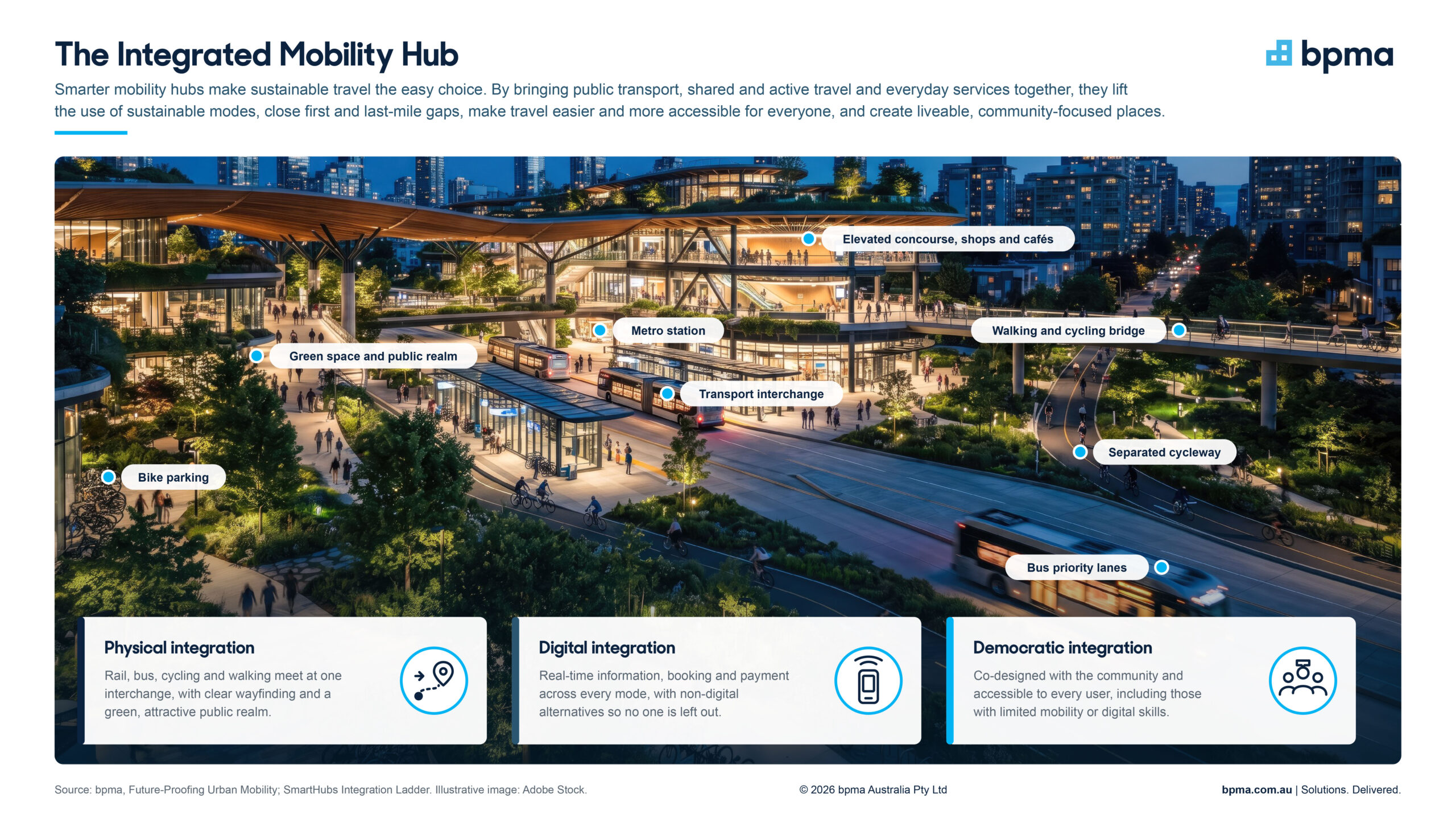
Smarter mobility hubs make sustainable travel the easy choice. By bringing public transport, shared and active travel and everyday services together, they lift the use of sustainable modes, close first and last-mile gaps, and create liveable, community-focused places.
The diagram shows the three dimensions of integration behind a successful hub: physical connections between modes, digital information, booking and payment, and democratic co-design with the community.
Smart Ticketing: Tap On to Settlement
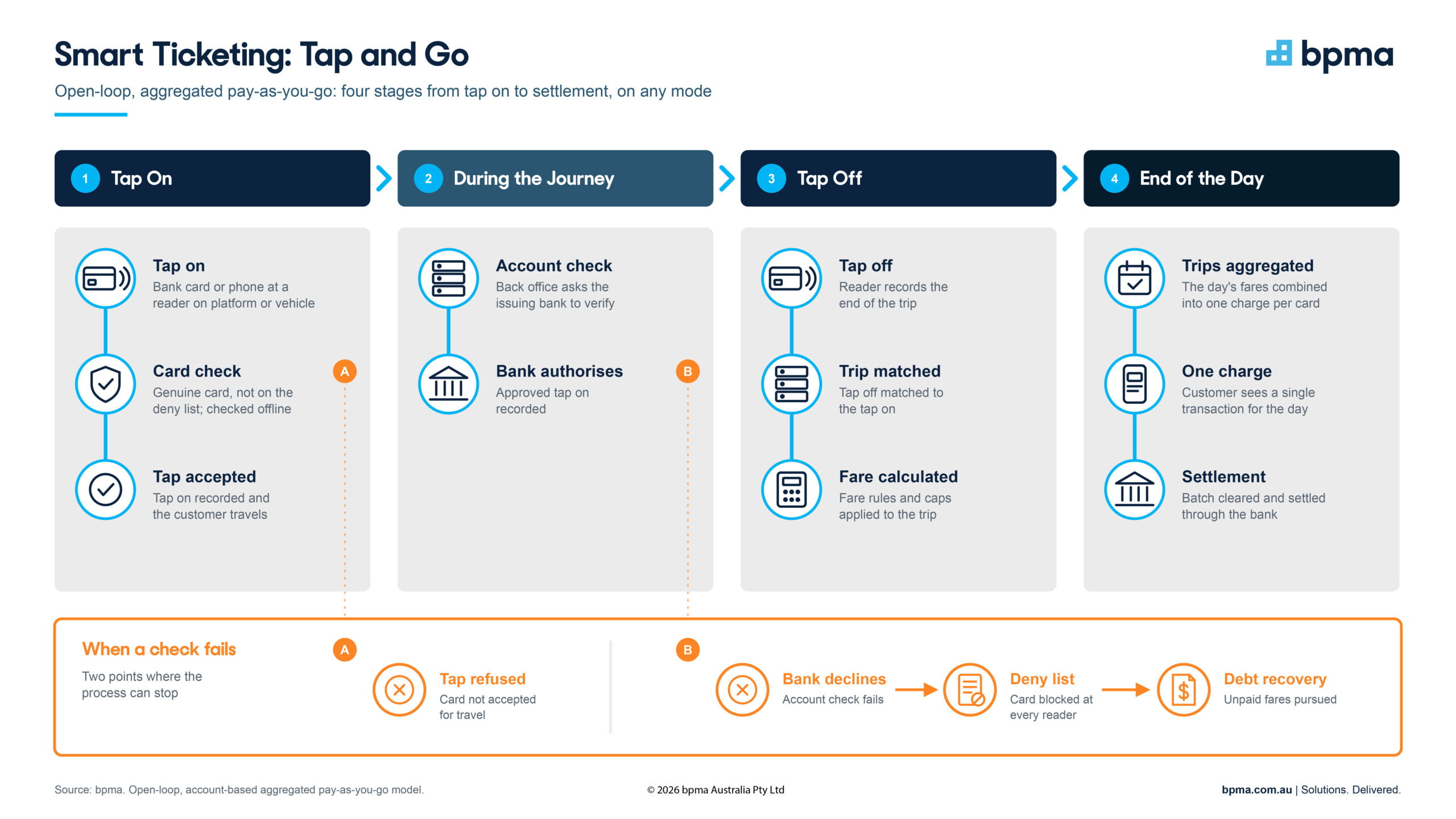
With open-loop smart ticketing, customers travel using the bank card or phone already in their pocket. The reader checks the card offline at tap on, so nobody waits for the bank. While the customer travels, the back office verifies the account with the issuing bank, and at tap off the trip is matched and the fare calculated.
At the end of the day, each card’s trips are combined into a single charge and settled through the bank. When a check fails, the card goes on the deny list and the unpaid fare is recovered.
our favourite books
Books that challenge conventional thinking, explain the forces reshaping infrastructure and industry, and show what it takes to lead change. These are the titles we recommend to clients and colleagues alike.
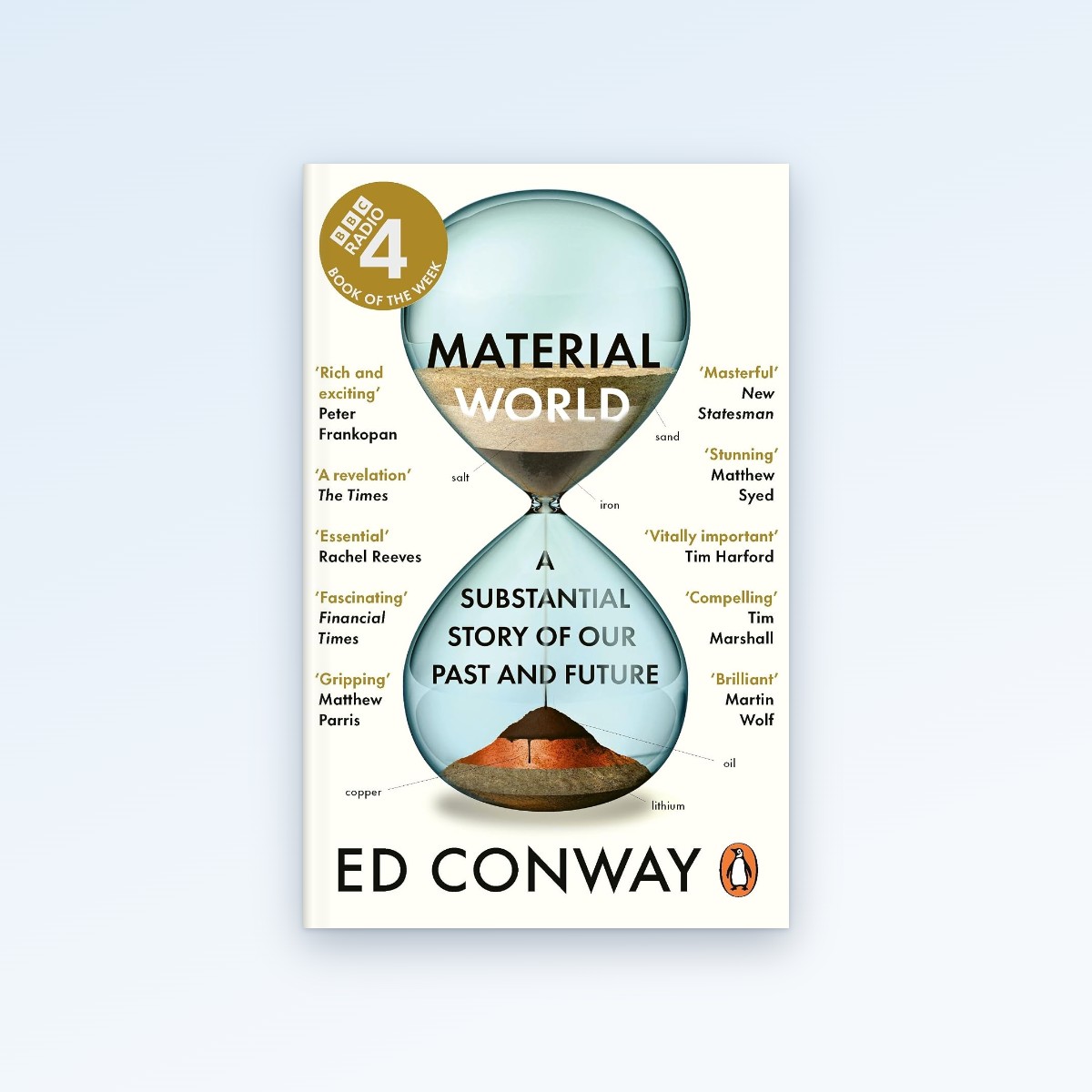
Ed Conway · 512 pages · 2023 (WH Allen)
Conway traces six materials (sand, salt, iron, copper, oil and lithium) from the ground to the products and infrastructure that depend on them. It shows how exposed modern economies are to supply chains most people never see, a timely lens for anyone delivering major projects or the energy transition.
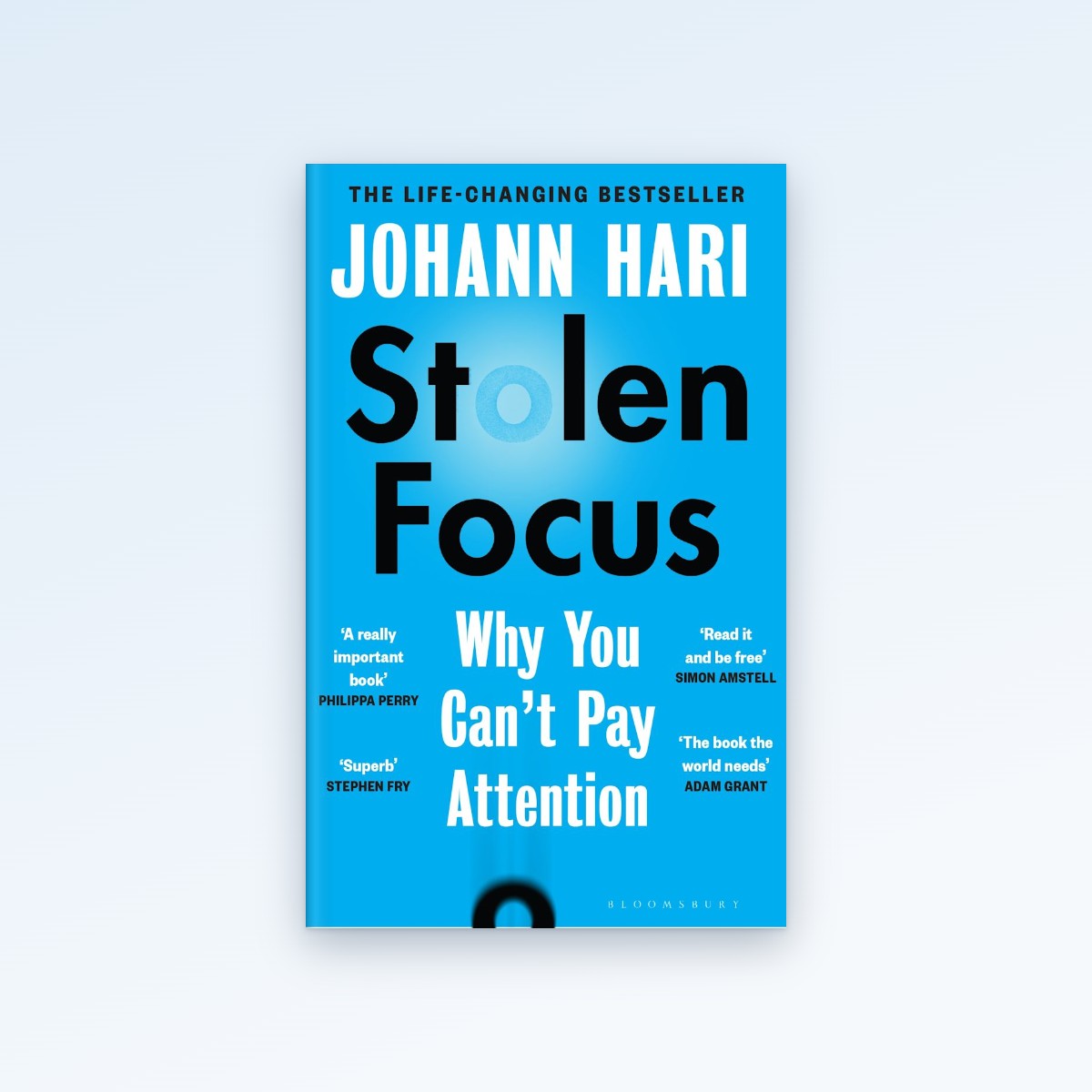
Johann Hari · 352 pages · 2022 (Bloomsbury)
Hari argues that declining attention is not a personal failing but the product of systems designed to fragment it, from technology platforms to the pace of modern work. It’s a useful prompt for leaders thinking about how teams do deep, complex work.
Jacinda Ardern · 352 pages · 2025 (Penguin)
Ardern’s memoir runs from her early life to her resignation as Prime Minister, including the Christchurch attacks and the COVID-19 response. Its central argument is that empathy and kindness are sources of strength in leadership, not weaknesses.
Explore by Service or Industry
Services
Our insights are grounded in our lived experience delivering major programs, organisational transformation and operational improvement for asset owners and government agencies. If they resonate with you and you’d like to find out more about what we do, explore our services.
Strategy & Advisory
We help clients understand and evaluate the choices required to achieve long-term sustainable results.
Find out more

Program & Project Management
Working with clients to successfully deliver Transport, Infrastructure, Utilities & Smart City projects.
find out more

Contracts & Commercial
Effective contract and commercial management is about enabling confident decision-making throughout the project lifecycle.
find out more

Asset Management
Optimising the links between project delivery, asset management & improved operational performance.
find out more